Stable across seasons, quick to restart
The result report was published. After a shutdown the plant returned to normal performance within 15 days, which suits schools, tourist places and temporary sites.
Home / Johkasou STP
Johkasou technology
How a prefabricated, plug-and-play packaged STP treats sewage inside one factory-built FRP tank, why Japan regulates it by law, and what independent tests in India have measured.
What is a Johkasou STP?
A Johkasou is a packaged sewage treatment plant developed in Japan. It treats toilet, kitchen and bathroom wastewater at the place where it is generated, inside a single fibre-reinforced plastic (FRP) tank, and returns water that can be reused on site.
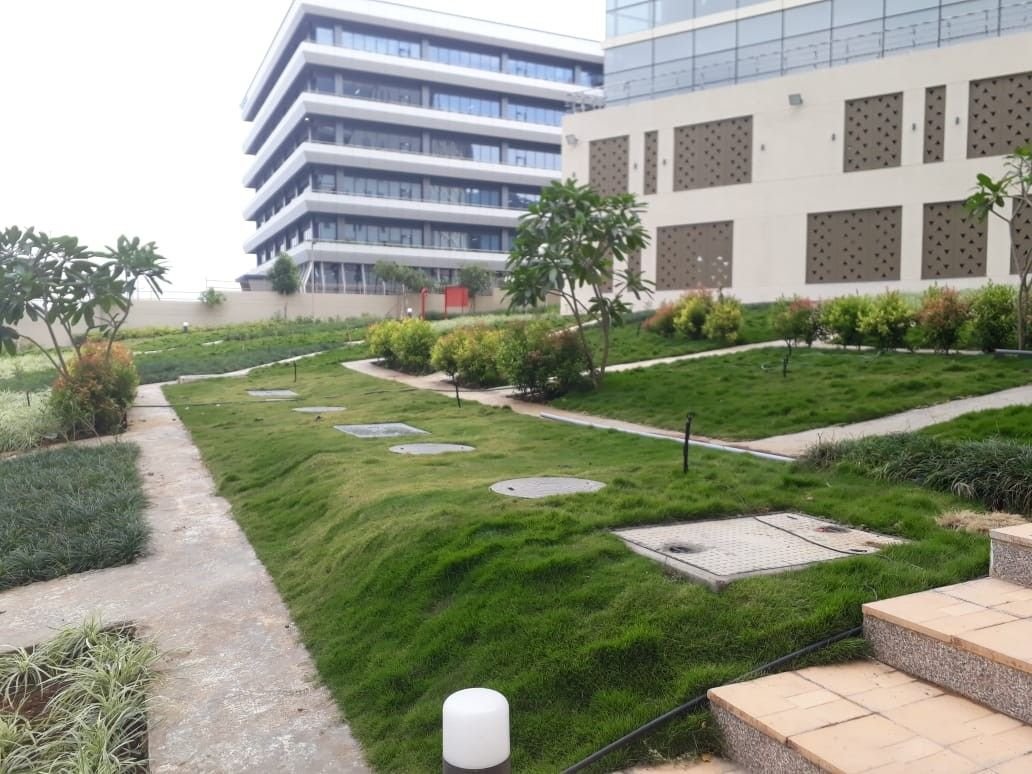
This is decentralised sewage treatment. India generates more than 72 billion litres of sewage every day, and sewer networks and central plants do not reach much of it. A Johkasou needs no sewer line. It goes under a car park, a lawn or a service yard and starts working as soon as it is commissioned.
In Japan, Johkasou manufacturing, installation, maintenance and desludging are regulated by a dedicated law, the Johkasou Act. Daiki Axis has built these plants under that discipline for decades and now manufactures them in India.
The treatment sequence
Approved and regulated
Johkasou joins two Japanese words: johka (purification) and sou (tank). It is both a product and a complete system created with the Japanese government.
Japanese discharge standards tightened step by step, from BOD 100 mg/L for early septic tanks to BOD 5 to 20 mg/L today. Daiki Axis now has 21 performance models in Japan and develops new models for local conditions, including India.
The Johkasou Act
After the Act, rivers such as the Sumida in Tokyo, heavily polluted in the 1960s, became clean again.
Features
One small air blower keeps water moving through the tank, even when no sewage is coming in.
The plant runs by itself. No full-time operator is needed.
Routine checks take about a quarter of an hour a month.
Plug-in installation of a factory-finished tank.
Continuous nitrification and denitrification through anaerobic and aerobic chambers.
Lower sludge generation means less frequent desludging.
Internal re-circulation evens out peaks, so no separate equalization tank is needed.
No leaking odour and no noisy machinery, with a performance guarantee.
Decentralised treatment
The basic idea of Johkasou is to treat wastewater where it is produced and reuse the water there. This suits India’s needs and conditions.
The best water treatment for a city is a combination of Johkasou STPs and centralised STPs.
| Item | One central STP | Six Johkasou STPs |
|---|---|---|
| Sewer piping | 3.5 km | 0.4 km |
| Operators | 2 | None |
| Power | 12.5 kW | 1.75 kW |
Packaged STP vs conventional STP
Many site-built STPs in India stop performing within a few years because they depend on skilled operators, constant power and regular repairs. A factory-built plant removes most of those failure points.
| What you compare | Daiki Axis Johkasou packaged STP | Conventional site-built STP |
|---|---|---|
| Construction | Built and tested in our Indian factories. Delivered as a finished FRP tank. | Concrete tanks cast on site. Quality depends on the contractor. |
| Installation time | Days. A small unit can be placed in as little as one day once the base is ready. | Typically months of civil work and equipment erection. |
| Space | Compact. Installed underground or above ground. The surface stays usable. | Needs a dedicated plant room or open land. |
| Operation | Automated. Small and mid-size plants need no full-time operator. | Needs trained operators on every shift. |
| Energy and moving parts | One air blower does most of the work. Low power draw, low noise, sealed against odour. | Multiple pumps, blowers and dosing systems to run and repair. |
| Expansion | Modular. Add tanks in parallel as occupancy grows. | Hard to expand once the concrete is poured. |
| Life-cycle support | Manufacturer service, inspection and AMC from the company that built the plant. | Often split between builder, equipment vendor and operating agency. |
SBR vs MBBR vs MBR vs Johkasou
| Item | SBR | MBBR | MBR | Johkasou STP |
|---|---|---|---|---|
| Treated-water BOD | 30–50 mg/L | 20–30 mg/L | 1–5 mg/L | 10–20 mg/L |
| Operators needed | 2–3 | 1–2 | 2–3 | None |
| Power draw | 2.4–3.0 kW | 2.0–2.4 kW | 4.0–5.6 kW | 0.74 kW |
| Character | Batch process, noisy operation | Good for BOD and COD only | Highest quality, highest cost | Basic treatment with nitrogen removal |
A 50 KLD Johkasou uses about 17.9 kWh of electricity a day. A conventional MBBR plant of the same size, with pumps and blowers totalling about 6 kW, uses about 144 kWh a day. The Johkasou has no replacement items other than the blower, and needs desludging about half as often.
An STP runs for many years, so running cost matters more than purchase price. Ask us for the 10-year comparison for your capacity.
Independent performance tests in India
| Level | Raw water BOD | Outlet BOD | Raw water total nitrogen | Outlet total nitrogen |
|---|---|---|---|---|
| Average | 251 | 8.6 | 41 | 4.8 |
| Maximum | 388 | 11.1 | 63 | 9.3 |
| Minimum | 178 | 5.2 | 21 | 1.0 |
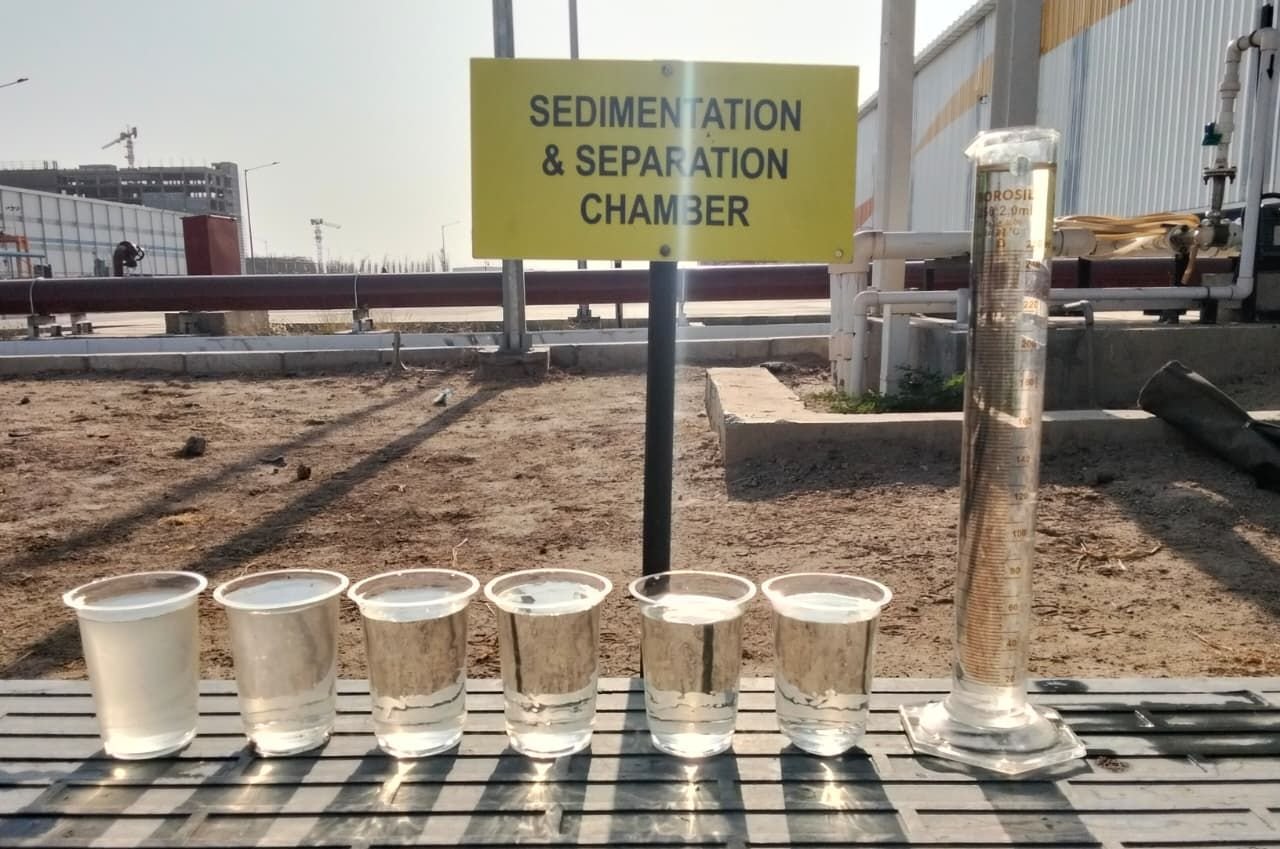
The result report was published. After a shutdown the plant returned to normal performance within 15 days, which suits schools, tourist places and temporary sites.
A 5 KLD Johkasou at the Decentralised Waste Management Technology Park at Jafrabad, East Delhi was commissioned in February 2022 and monitored for a year against NGT norms of BOD 10 mg/L.
Phase 1 of a JICA-funded joint study found good BOD and COD removal and total nitrogen always below 10 mg/L. Phase 2 continues with operation and design improvements.
Water purification technology
Johkasou treats sewage. CCIP purifies source water. It is our second core technology, and it replaces reverse osmosis (RO) where the source water has total dissolved solids (TDS) under 2,000.
RO pushes water through a membrane at high pressure and sends the rejected salt to drain as brine. CCIP uses capacitive de-ionisation (CDI): a low-voltage electric field pulls the dissolved ions to carbon sheets while the water flows straight through.
The result is about 80% less energy than RO and more than 80% of the water recovered, against about 60% for RO.